Rights of Persons with Disabilities (UNCRPD). There are also "Shadow Reports" being compiled around the country by user led disabled people's organisation's that will outline how well they believe the Government is doing. The UNCRPD was ratified by the UK on the 8th June 2009 before the surge in online campaign groups like the WOWpetition and rather than consider how well the Government has done in implementing this Treaty, the WOWcampaign (or WOWpetition mk.ii!!) is asking what should the UK Bill of Rights for Sick and Disabled People be, knowing what we know now!
What do you think?
Tell us at http://edwinmandella.blogspot.co.uk/2014_07_01_archive.html
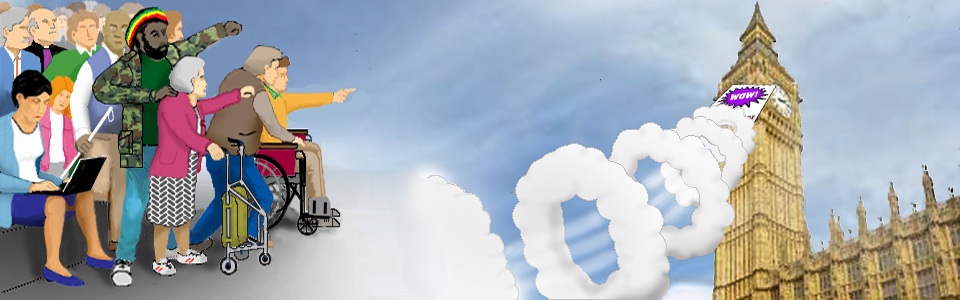
The WOW Petition - 100,000 signatures captured. Next #WOWdebate2014 to stop the War on Welfare

23/02/2014
DPAC, Black Triangle & WOW Petition Joint Statement on the Bizarre ATOS Exit Strategy

DPAC, Black Triangle & WOW Petition
Joint Statement on the
Bizarre ATOS Exit Strategy
Several
years of campaigning have paid off in making more and more people realise that
ATOS, the Work Capability Assessment (WCA) and Department for Work and Pensions
(DWP) policies imposed by the ConDems are completely toxic, inhuman and
abhorrent.
DPAC have
been leading campaigns against ATOS, the WCA and DWP since 2010 including:
visits to Trinton Square (shiny headquarters of ATOS), with our local
DPAC groups repeatedly protesting outside their local assessment centres and
feeding in to the day of protest on the 19th of February. DPAC also fed into the channel 4 program
Dispatches: ‘Britain on the Sick’ which revealed the horrendous system of
getting as many people removed from support as possible, has exposed the
devastation and misery and led the highly successful ATOS games in 2012 which
saw ATOS shares drop in value and an increase in media attention against them.
DPAC have occupied Caxton House (home of the DWP) and gathered outside the
entrance of the DWP on many occasions, most recently in the 7 days of action
‘Reclaiming our Futures’.
Our sister
group Black Triangle have fought tirelessly with us. Black Triangle has worked
with us for over 3 years fighting and exposing continuous wrong doing and
working on publicising regulations that can be used by GPs to prevent further
harm to thousands of disabled people under the WCA regime. Our allies at WOW
have successfully raised the issue of a cumulative impact assessment,
abolishing the WCA with the Wow petition, and secured a debate in Parliament on
February 27th. This month also saw a UK wide protest outside local
ATOS centres organised by local groups. We’ve all been clear that it is the WCA
itself that needs to be scrapped immediately.
The bizarre
exit strategy ATOS have developed in identifying apparent physical threats on
Facebook despite the growing lists of real deaths caused by the WCA regime is
an outrageous insult to all those that have died and all those that have lost
family members through this regime. It is an insult to those left without their
homes, without money and needing to go to foodbanks. It is an insult to every
person who has suffered worsening physical and mental health through this inhuman
regime.
ATOS
attempting to pull out of its contact represents only a partial victory. The
alphabet corporations (G4S, A4E, SERCO, CAPITA) are already lining up to take
over the multi-million profits and the mantle of the new Grim Reapers. The
misery imposed by this Government and the DWP will continue as long as its
heinous policies continue.
Goodbye to
ATOS -but the WCA must also end. The reign of terror by this unelected
Coalition Government which has awarded itself pay rises, cut taxes for those earning
over £150,000 while piling punishment, poverty, misery and premature death on
everyone else in its policies of rich against poor must end.
Make no
mistake- We will continue to demonstrate against ATOS, now delivering the
complete failure of PIP in which claims are being delayed by up to a year. We
will demonstrate against any other company that takes over the WCA contract. We
will continue to demand the immediate removal of the WCA, and the removal of
this Government.
DPAC, Black Triangle and WOW demand:
1. That the WCA be ended with
immediate effect to be replaced with a rigorous and safe system that does not
cause avoidable harm to disabled people, those with chronic health issues,
terminal illnesses or long term health issues. It is the WCA - the assessment
itself - that is fundamentally flawed and must end now as called for by the
British Medical Association (BMA), the Royal College of Nursing and the 104,725
people who signed the WOW Petition.
2. That the UK Government at
Westminster and the opposition follow the Scottish Government's pledge that
private for-profit companies are removed entirely from having anything to do
with the assessment of disabled people. This area of public policy belongs
firmly within the NHS and the public sector.
3. That all
support and commend the initiative being led by Black Triangle in union with
DPAC and WOW to work together with the BMA to ensure that GPs are able to flag
up a substantial risk of harm to disabled people, those with chronic health issues,
terminal illnesses or long term health issues at the very outset of the WCA process.
The complete lack of any such mechanism to assess and flag up complex risk
under the current regime has given rise to countless tragedies which could
thereby have been avoided.
4.
That the PIP contract be removed from ATOS with immediate effect-they
have shown errors beyond incompetence affecting thousands of disabled people,
leading to waits of up to a year and leaving people without income or food
We’ll
celebrate Atos’ realisation that the WCA contract has always been poisonous,
but we won’t rest or stay quiet. Atos’ absence from the WCA regime will not
allow us forget the evil we have endured:
- Fear of fitness to work tests driving disabled patients to suicide, say 6% of GPs
- The tragedy of Alice, How the Work Capability Assessment costs lives
- Former bodybuilder from Willington who can barely walk contemplated suicide after nurse ruled him fit to work
- Benefits withdrawal led to man’s suicide
- Benefits row dad takes his own life and is found dead in his flat by his fiancee
- Sneinton man overdoses after benefits stopped
- Heartbroken dad reveals agony as decision to axe his son's benefits is overturned.. weeks after his boy killed himself
- Benefit Cuts Caused Disabled Yorkshire Man Nicholas Barker To Take His Life, Rules Coroner
- Back problems led to fatal dose
- Benefits man found hanged, inquest heard
- Author's suicide 'due to slash in benefits'
- Woman who drowned in drain was upset about health check
- Norwich man killed himself ‘over back-to-work fears’
- Inquest hears of Cumbrian dad's health benefits worries
- Fears over benefits led to tragedy
- Benefits withdrawal led to man’s suicide
- Unemployed Gravesend man hanged himself after sickness benefits were cut
- Grandfather Shaun Pilkington Found Dead After Receiving Letter Saying Benefits Will Be Stopped
- Disabled Kinver man killed himself after being left "almost destitute" when his state benefits were axed
- Bristol woman 'killed herself after benefits were stopped'
- John McDonnell MP speaking up for Atos Healthcare victims
- BBC South East Today 13th December 2013 on the WCA
- Cancer killed my husband, but Atos took his dignity a long time before his death
- Islington Council passes vote of no confidence in disabled assessing company Atos
- Grieving son blasts benefit cuts: My dad looked like a concentration camp prisoner before he died
- Amy Jones, Woman With Cerebral Palsy, Given Prognosis By ATOS That Her Disability 'Expected To Improve'
- Atos fit-to-work assessments branded 'farcical' as nearly half of people with progressive diseases like Parkinson's told they'll RECOVER
- Disabled benefits claimants test: Atos reports found 'unacceptably poor'
- Atos assessors told to keep disability benefit approvals low, film suggests
- Linda Wootton: Double heart and lung transplant dies nine days after she has benefits stopped
- Blind in one eye, partially deaf and facing major spinal surgery but Thalidomide mother is STILL found fit to work
- Atos scandal: Man found fit to work despite peeling bones
- This brutal new system': a GP's take on Atos and work capability assessments
- Atos told incontinent woman to ‘wear nappy’
- Get ready for work: what woman who needs constant care was told
Quoting the targets from the trainer in the dispatches show – just 13% expected to keep ESA
Atos have £3bn pounds in public contracts, yet pay no tax here.
Whistleblowers Greg Wood
- Claimants 'tricked' out of benefits, says Jobcentre whistleblower
- Whistleblower former Atos doctor talks to BBC News (May 2013)
The complete failure around people presenting with MH Diagnosis.
- Work assessments unfair on mentally ill, says court
- How are those with mental health problems treated by Atos?
- Why can’t we find out more about Atos mental function champions? Man having heart attack during assessment and getting marked as walking out
Claimants left out in the cold
Police called on Welfare Advisors
Atos claimed to be working with groups they weren't.
and Atos boss accused of 'living in a parallel universe' after claiming hated benefits assessor is popular with public - Mirror Online
Goodbye ATOS-We’ll be back…. This statement is also supported in Solidarity by:
- Inclusion London
- Pat's Petition
09/01/2014
The WOW Debate Is A Go - Now We Need Your Help Again!

December 12th, 2013 was, for many of us, a small moment of celebration as the WOW Petition ended with over 104,000 signatures and triggered the eligibility for consideration by the Back Bench Business Committee (BBBC).
After a year of cajolling, persuading, writing to MPs, campaign groups, charities, anti austerity groups, and many others it had all paid off and, for at least a moment, we could relax and realise that we had completed the first part of what we had set out to achieve.Now, of course, the hard part comes.John McDonnell, Labour MP for Hayes and Harlington, graciously agreed to present the WOW Petition to the BBBC, which he did on both the 3rd and the 10th of December and, with his and others support, managed to secure in principle a full debate on the WOW Petition in the House of Commons in the New Year, at a date yet to be decided.
So this is, once again, where we need your help.For us to have any chance of success whatsoever, we must persuade MPs of our case and get them to support what we are trying to achieve. That’s no easy task, but it is vital that we try and this is how you can help us.
Write to your MP.
We need the support of as many MP's as possible going into this debate and to do this we must persuade them to support us, so please:
Write to your MP
We need the support of as many MP's as possible going into this debate and we need to persuade many to support us, so please:
- Write to your local MP (you can find the details by using our Write to your MP tool) and we've produced a couple of suggested template letters here (outline) and here (detailed)
- Or if you'd prefer to e-mail your MP we've put together an automated tool to help you compile and send it here.
Our advice would be to do as much or as little as you feel able to and comfortable with. A cut and paste letter/ e-mail (Option 1) may be the option that suits you best and allows you to personalise your letter/ e-mail to your MP. Our automated tool is a quick and easy way to effectively let your MP know about the #WOWdebate2014 and your feeling about it. If like myself, you wish to make it more personal then by all means please do. We have included briefing notes on earlier blogs so please use them if you wish. I will be writing a shorter letter and then arranging to meet with my MP to discuss it in more detail, but that is what I'm comfortable with.
Continue to Spread the Word
Whilst signatures may now be closed, every little bit of support can still make a difference to the Campaign. By promoting #WOWpetition on Twitter and Facebook - we'll be using Hashtag #WOWdebate2014 in the run up to the actual day - we can show how much support there is out there. Let family and friends know what we're doing and how they can help us.
Other Suggestions?Let us know! I’m sure there’s ideas we haven’t thought of - we’re only human, after all - so please feel free to get in touch with us. We’re on the above links or you can email us at info@wowpetition.com
To all of our supporters - thank you for everything you’ve done to get us this far and we look forward to a successful 2014. Happy New Year to you all.
03/01/2014
Analysis of WOWpetition for MP's Prior to the #WOWdebate2014
The WOWpetition calls for
1. A Cumulative Impact Assessment (CIA) of all cuts and changes affecting sick & disabled people, their families and carers, and a free vote on repeal of the Welfare Reform Act.
The response received from the DWP upon the WOWpetition reaching 10,000 signatures, stated that the Government had not done a Cumulative Impact Assessment of the effects of the Welfare Reform Bill 2012 because “it is very difficult to do accurately and external organisations have not produced this either.” However, since posting this response, 2 external agencies, “DEMOS” and the “Centre for Welfare Reform” have separately produced relevant CIA’s.
DEMOS’s analysis showed a cumulative loss of income for disabled people of £28.3 billion over the 5 years to 2018. Referring to this analysis, Richard Hawkes, Chief Executive of disability charity Scope said: “At the moment there’s no place for disabled people in the Chancellor’s aspiration nation. In 2013 disabled people are already struggling to pay the bills. Living costs are spiralling. Income is flat-lining. We know many are getting in debt, just to pay for essentials. What’s the Government’s response? The same group of disabled people face not just one or two cuts to their support, but in some cases three, four, five or even six cuts. It paints a frightening picture of the financial struggles affecting disabled people in 2013. On top of this the Government is suggesting capping the welfare bill in the June spending review – having already slashed billions.”
Dr Simon Duffy of the Centre for Welfare Reform, on behalf of the Campaign for a Fair Society, produced analysis that suggested the cuts to benefits and services fell disproportionately on minority groups. The extreme unfairness of this policy is demonstrated if we compare the burden of cuts born annually by most citizens (£467 per person) to the burden on people in poverty (£2,195: 5 x rest of population), the burden on disabled people (£4,410: 9 x rest of population) and the Burden on people with severest disabilities (£8,832: 19 x rest of population).
We believe that the Government either needs to demonstrate that the CIA’s produced are not accurate and produce its own CIA or explain why the austerity measures have been targeted at people, who WOWpetition believe, the Government thought would not fight back.
2. An immediate end to the Work Capability Assessment, as voted for by the British Medical Association. Consultation between the Depts of Health & Education to improve support into work for sick & disabled people, and an end to forced work under threat of sanctions for people on disability benefits.
The Work Capability Assessment judges the Capability for work or work related activity of Employment and Support Allowance (ESA) claimants. We believe the current test is totally discredited, with the Prime Minister saying in October 2013 that its provider, Atos, had "to improve the quality of decision-making" in the face of sustained criticism of both the efficacy and effectiveness of what, WOWpetition believe, is not a tool meant to enable disabled people and help them to achieve what they feel capable of but instead a blunt instrument to reduce the social security bill. We do not believe it is right that in the 21st Century an experimental process has been imposed on sick and disabled people with in some cases fatal consequences. Over 10,000 people have died within 6 weeks of being compelled to submit to what has been described as a “dehumanizing, brutal and aggressive quasi-medical assessment”.
WOWpetition believes that any method for assessing the financial support given, and the life opportunities presented to sick and disabled people needs to be based upon 3 questions: “What do you want to do?” “What stops you from doing that?” “What adjustments can be made to enable you?” Any process that seeks to enable disabled people and give them equality of opportunity, needs to address not just the “supply side” issues of “what can you do” but also needs to address “demand side” prejudices and ensure society provides the opportunities to people facing significant barriers to mainstream employment opportunities, in a fair way that gives people with impairments equality of opportunity. Additionally, any individual trying to enhance their experience should not be penalised/ restricted, as they already face difficulty with employment.
More than anything, WOWpetition wants a system based upon trust. The evidence clearly shows that at approximately 0.7%, Benefit fraud is non-systemic and the overwhelming feeling of grassroots Disabled Peoples Organisation’s, expressed at a summit organised by WOWpetition in London on the 25th October 2013, was that sick and disabled people are sick of being treated as guilty until proven innocent and that the system needs to embody trust, not persecution.
Irrespective of their ability to work, sick & disabled people should be able to rely upon financial support from society that would allow them to experience a good standard of living.
3. An Independent, Committee-Based Inquiry into Welfare Reform, covering but not limited to: (1) Care home admission rises, Daycare Centre’s, access to education for people with learning difficulties, universal mental health treatments, Remploy closures; (2) DWP media links, the ATOS contract, IT implementation of Universal Credit; (3) Human rights abuses against disabled people, excess claimant deaths & the disregard of medical evidence in decision making by ATOS, DWP & the Tribunal Service.
WOWpetition cannot understand how in the Worlds 6th richest country (by GDP – IMF 2012) the situation can have been allowed to occur where, despite the UK ratifying the UN Convention of the Rights of Persons with Disabilities in 2009, what is arguably “retrogressive legislation” has been introduced, without being effectively challenged pre-implementation.
At its AGM on April 14 2013, Amnesty International UK passed a resolution on the Human Rights of sick and disabled people in the UK. The resolution (A5) read:
“This AGM calls for urgent action to halt the abrogation of the human rights of sick and disabled people by the ruling Coalition government and its associated corporate contractors.”
It is WOWpetition’s belief that The WRA 2012 was “rushed” through Parliament with the House of Commons using the procedural tool of “financial privilege” to curtail debate and over-turn the amendments tabled by the House of Lords. We believe The House of Lords had taken very relevant advice from the Equality and Human Rights Commission, with the effect that the Human Rights and Equality issues pertinent to the WRA 2012 have been largely ignored. Some overlooked amendments have since been the subject of successful legal challenges, and the Minister for Disabled People has been criticized in open court for failing to consider the effect her policies have on equality of opportunity.
WOWpetition call for the UK to comply with the spirit of its Treaty Obligations and, in line with “Article 4 – General Obligations” of the UNCRPD, strive to achieve full realization of the rights so included in that document without prejudice. As an example of what we would argue is the non-compliance of the UK with this Treaty, we are dismayed that an apparent working definition of “Equality of Opportunity” appears to be, that employers may choose to favour a disabled candidate over a non-disabled candidate. This, we believe, is not what was intended by “Article 3 – General Principles” of the UNCRPD.
In order for lessons to be learnt and safeguards put in place to ensure persons with disabilities are never again to face what we believe is a coordinated onslaught on our human rights and right to life, we call for an independent Committee based enquiry into Welfare Reform.
Most worrying are the comments attributed to the Mayor of London, Boris Johnson on Nov 28th 2013, in which he says “It is surely relevant to a conversation about equality that as many as 16% of our species have an IQ below 85, while about 2% have an IQ above 130.”
Is a person’s worth or right of equality to be linked to his measured IQ? Is economic potential the accepted measure of somebody’s value and equality? This comment is not acceptable.
Conclusion
WOWpetition suggests that sick and disabled people are the target of a sustained attack on their human rights and standard of living as it is believed they will not fight back. We agree with Richard Hawkes of Scope who said “At the moment there’s no place for disabled people in the Chancellor’s aspiration nation.” WOWpetition seeks a society where disabled people (through birth, trauma or illness) are given true equality of opportunity and valued appropriately, based upon their intrinsic humanity.
On the 10th July 2013 an Opposition Day Debate on “Disabled people” called for a Cumulative Impact Assessment of the changes made by Government that affect disabled people. We argue that the debate called for by the WOWpetition is significantly different to this debate, based on:
· Following this debate, The Centre for Welfare Reform has also done what is “very difficult to do accurately” and produced a Cumulative Impact Assessments. This, and the Demos one previously done, demonstrate how this government’s austerity measures have been unfairly targeted at sick and disabled people. The House needs to debate why disabled people are seen as easy targets by this government or the DWP needs to challenge the findings.
· It is widely reported that both the new Universal Credit Payment (UC) and the Personal Independence Payments (PIP) are in trouble. WOWpetition believe the UK government should take the time to carefully consider the effect the transition to these potentially flawed procedures would have on sick and disabled people and if it is prepared to inflict more excess deaths on these communities.
· The DWP publication “Fulfilling Potential – The Next Steps” is put forward by Esther McVey MP as a remedy for the exclusion and barriers to society facing disabled people. WOWPetition believes this document is flawed and based upon Esther McVey’s inability to distinguish between the Social Model of Disability and the Bio-psychosocial Model of Disability which, we believe, she seems to think are the same thing. How to enable disabled people to fulfill their potential should be debated in conjunction with relevant meaningful published statistics to identify how best to deliver meaningful Equality of Opportunity to sick and disabled people. How long do we have to wait until sick and disabled are given meaningful Equality of Opportunity, which is a requirement under “Article 3 – The General Principles” of the “UN Convention on the Rights of Persons with Disabilities“.
WOWpetition therefore asks all MP's that no matter their political position they demonstrate that they are prepared to engage and debate the issue affecting Sick and Disabled People by attending the Main Chamber debate of the WOWpetition in the New Year.
23/12/2013
Draft letter to MPs - Option 2
Dear …..
I am writing as your constituent to ask you to represent my views in Parliament.
I signed and supported a government e-petition, the WOW petition, which passed the 100,000 signature mark, and on the 10th December 2013 was granted a full chamber debate by the Back Bench Business Committee in the New Year. This in itself is a historic event as it is the first time in the history of this country that disabled people have secured a Main Chamber debate.
The petition calls for a cumulative impact assessment of welfare reform as it affects sick and disabled people and carers, and an end to the Work Capability Assessment, as demanded by the British Medical Association.
==================
Please add a personal message here to illustrate how this Government's Policies are either directly affecting you, your family, people you know or society and why you believe the Government should properly debate their policies, the effect they are having and the hardship they are causing to specifically targeted groups with UK society.
==================
I know you are very busy, but please allow me to present some evidence to support the need for these measures.
The Welfare Reform Act 2012 was promoted as the biggest shake up in welfare for 60 years, so it was extraordinary that no assessment was carried out on how it would affect the most vulnerable people in society. I believe the government now needs to take stock, and face the fact that sick and disabled people have been caused great distress and hardship by measure such as the bedroom tax, the twenty per cent cut in the budget for Disability Living Allowance, the closure of the Independent Living Fund to new applicants, and many more measures. The think tank Demos has calculated that disabled people, already more likely to be living in poverty, will lose around £28 billion over five years. This hardly seems to be sharing the burden of austerity fairly.
As for the Work Capability Assessments, these have been a disaster. The British Medical Association last year called for them to be scrapped with immediate effect. Parkinson’s UK’s research found that almost half of people with a progressive illness, when assessed, are told they will get better and placed in the Work Related Activity Group. This means they are required to prepare for work, and if they are unable to do what is required of them can be sanctioned leaving them with no income. Please remember these are people with Parkinsons Disease and other progressive illnesses.
As my representative in Parliament I am requesting that you attend and speak at this debate so that your constituents and I can understand your views on Government Policy towards sick and disabled people.
22/12/2013
Analysis of the WOWpetition for MP's prior to WOWdebate2014
Dear _____________
As a constituent of yours I noted that at the Backbench Business Committee meeting of the 10th December 2013 e-petition 43154, The WOWpetition, was granted a Chamber debate in the House of Commons in the New Year 2014. This was in fact a historic decision, as it is the first time in the history of this country that disabled people have secured a Chamber debate.
==================
Please add a personal message here to illustrate how this Government's Policies are either directly affecting you, your family, people you know or society and why you believe the Government should properly debate their policies, the effect they are having and the hardship they are causing to specifically targeted groups with UK society.
==================
As your constituent I ask you to attend this debate in the House of Commons in 2014 so that your constituents and I can understand your views as to whether austerity is being fairly imposed on all elements of society, as we have been told that "we are all in this together". Please confirm with me that you will be attending this debate, when its timing is announced, in the New Year.
The Leader of the House, Andrew Lansley MP is aware of the WOWpetition referring to it as "That Petition" in the House on the 5th December in response to a question. If you are not yet aware of this petition it is outlined in depth, to give you the information you need to consider the issues, by the following sections and is still available to read on the e-petitions website (e-petition 43154).
The WOWpetition calls for
1. A Cumulative Impact Assessment (CIA) of all cuts and changes affecting sick & disabled people, their families and carers, and a free vote on repeal of the Welfare Reform Act.
The response received from the DWP upon the WOWpetition reaching 10,000 signatures, stated that the Government had not done a Cumulative Impact Assessment of the effects of the Welfare Reform Bill 2012 because “it is very difficult to do accurately and external organisations have not produced this either.” However, since posting this response, 2 external agencies, “DEMOS” and the “Centre for Welfare Reform” have separately produced relevant CIA’s.
DEMOS’s analysis showed a cumulative loss of income for disabled people of £28.3 billion over the 5 years to 2018. Referring to this analysis, Richard Hawkes, Chief Executive of disability charity Scope said: “At the moment there’s no place for disabled people in the Chancellor’s aspiration nation. In 2013 disabled people are already struggling to pay the bills. Living costs are spiralling. Income is flat-lining. We know many are getting in debt, just to pay for essentials. What’s the Government’s response? The same group of disabled people face not just one or two cuts to their support, but in some cases three, four, five or even six cuts. It paints a frightening picture of the financial struggles affecting disabled people in 2013. On top of this the Government is suggesting capping the welfare bill in the June spending review – having already slashed billions.”
Dr Simon Duffy of the Centre for Welfare Reform, on behalf of the Campaign for a Fair Society, produced analysis that suggested the cuts to benefits and services fell disproportionately on minority groups. The extreme unfairness of this policy is demonstrated if we compare the burden of cuts born annually by most citizens (£467 per person) to the burden on people in poverty (£2,195: 5 x rest of population), the burden on disabled people (£4,410: 9 x rest of population) and the Burden on people with severest disabilities (£8,832: 19 x rest of population).
We believe that the Government either needs to demonstrate that the CIA’s produced are not accurate and produce its own CIA or explain why the austerity measures have been targeted at people, who WOWpetition believe, the Government thought would not fight back.
2. An immediate end to the Work Capability Assessment, as voted for by the British Medical Association. Consultation between the Depts of Health & Education to improve support into work for sick & disabled people, and an end to forced work under threat of sanctions for people on disability benefits.
The Work Capability Assessment judges the Capability for work or work related activity of Employment and Support Allowance (ESA) claimants. We believe the current test is totally discredited, with the Prime Minister saying in October 2013 that its provider, Atos, had "to improve the quality of decision-making" in the face of sustained criticism of both the efficacy and effectiveness of what, WOWpetition believe, is not a tool meant to enable disabled people and help them to achieve what they feel capable of but instead a blunt instrument to reduce the social security bill. We do not believe it is right that in the 21st Century an experimental process has been imposed on sick and disabled people with in some cases fatal consequences. Over 10,000 people have died within 6 weeks of being compelled to submit to what has been described as a “dehumanizing, brutal and aggressive quasi-medical assessment”.
WOWpetition believes that any method for assessing the financial support given, and the life opportunities presented to sick and disabled people needs to be based upon 3 questions: “What do you want to do?” “What stops you from doing that?” “What adjustments can be made to enable you?” Any process that seeks to enable disabled people and give them equality of opportunity, needs to address not just the “supply side” issues of “what can you do” but also needs to address “demand side” prejudices and ensure society provides the opportunities to people facing significant barriers to mainstream employment opportunities, in a fair way that gives people with impairments equality of opportunity. Additionally, any individual trying to enhance their experience should not be penalised/ restricted, as they already face difficulty with employment.
More than anything, WOWpetition wants a system based upon trust. The evidence clearly shows that at approximately 0.7%, Benefit fraud is non-systemic and the overwhelming feeling of grassroots Disabled Peoples Organisation’s, expressed at a summit organised by WOWpetition in London on the 25th October 2013, was that sick and disabled people are sick of being treated as guilty until proven innocent and that the system needs to embody trust, not persecution.
Irrespective of their ability to work, sick & disabled people should be able to rely upon financial support from society that would allow them to experience a good standard of living.
3. An Independent, Committee-Based Inquiry into Welfare Reform, covering but not limited to: (1) Care home admission rises, Daycare Centre’s, access to education for people with learning difficulties, universal mental health treatments, Remploy closures; (2) DWP media links, the ATOS contract, IT implementation of Universal Credit; (3) Human rights abuses against disabled people, excess claimant deaths & the disregard of medical evidence in decision making by ATOS, DWP & the Tribunal Service.
WOWpetition cannot understand how in the Worlds 6th richest country (by GDP – IMF 2012) the situation can have been allowed to occur where, despite the UK ratifying the UN Convention of the Rights of Persons with Disabilities in 2009, what is arguably “retrogressive legislation” has been introduced, without being effectively challenged pre-implementation.
At its AGM on April 14 2013, Amnesty International UK passed a resolution on the Human Rights of sick and disabled people in the UK. The resolution (A5) read:
“This AGM calls for urgent action to halt the abrogation of the human rights of sick and disabled people by the ruling Coalition government and its associated corporate contractors.”
It is WOWpetition’s belief that The WRA 2012 was “rushed” through Parliament with the House of Commons using the procedural tool of “financial privilege” to curtail debate and over-turn the amendments tabled by the House of Lords. We believe The House of Lords had taken very relevant advice from the Equality and Human Rights Commission, with the effect that the Human Rights and Equality issues pertinent to the WRA 2012 have been largely ignored. Some overlooked amendments have since been the subject of successful legal challenges, and the Minister for Disabled People has been criticized in open court for failing to consider the effect her policies have on equality of opportunity.
WOWpetition call for the UK to comply with the spirit of its Treaty Obligations and, in line with “Article 4 – General Obligations” of the UNCRPD, strive to achieve full realization of the rights so included in that document without prejudice. As an example of what we would argue is the non-compliance of the UK with this Treaty, we are dismayed that an apparent working definition of “Equality of Opportunity” appears to be, that employers may choose to favour a disabled candidate over a non-disabled candidate. This, we believe, is not what was intended by “Article 3 – General Principles” of the UNCRPD.
In order for lessons to be learnt and safeguards put in place to ensure persons with disabilities are never again to face what we believe is a coordinated onslaught on our human rights and right to life, we call for an independent Committee based enquiry into Welfare Reform.
Most worrying are the comments attributed to the Mayor of London, Boris Johnson on Nov 28th 2013, in which he says “It is surely relevant to a conversation about equality that as many as 16% of our species have an IQ below 85, while about 2% have an IQ above 130.”
Is a person’s worth or right of equality to be linked to his measured IQ? Is economic potential the accepted measure of somebody’s value and equality? This comment is not acceptable.
Conclusion
WOWpetition suggests that sick and disabled people are the target of a sustained attack on their human rights and standard of living as it is believed they will not fight back. We agree with Richard Hawkes of Scope who said “At the moment there’s no place for disabled people in the Chancellor’s aspiration nation.” WOWpetition seeks a society where disabled people (through birth, trauma or illness) are given true equality of opportunity and valued appropriately, based upon their intrinsic humanity.
On the 10th July 2013 an Opposition Day Debate on “Disabled people” called for a Cumulative Impact Assessment of the changes made by Government that affect disabled people. We argue that the debate called for by the WOWpetition is significantly different to this debate, based on:
· Following this debate, The Centre for Welfare Reform has also done what is “very difficult to do accurately” and produced a Cumulative Impact Assessments. This, and the Demos one previously done, demonstrate how this government’s austerity measures have been unfairly targeted at sick and disabled people. The House needs to debate why disabled people are seen as easy targets by this government or the DWP needs to challenge the findings.
· It is widely reported that both the new Universal Credit Payment (UC) and the Personal Independence Payments (PIP) are in trouble. WOWpetition believe the UK government should take the time to carefully consider the effect the transition to these potentially flawed procedures would have on sick and disabled people and if it is prepared to inflict more excess deaths on these communities.
· The DWP publication “Fulfilling Potential – The Next Steps” is put forward by Esther McVey MP as a remedy for the exclusion and barriers to society facing disabled people. WOWPetition believes this document is flawed and based upon Esther McVey’s inability to distinguish between the Social Model of Disability and the Bio-psychosocial Model of Disability which, we believe, she seems to think are the same thing. How to enable disabled people to fulfill their potential should be debated in conjunction with relevant meaningful published statistics to identify how best to deliver meaningful Equality of Opportunity to sick and disabled people. How long do we have to wait until sick and disabled are given meaningful Equality of Opportunity, which is a requirement under “Article 3 – The General Principles” of the “UN Convention on the Rights of Persons with Disabilities“.
WOWpetition therefore asks all MP's that no matter their political position they demonstrate that they are prepared to engage and debate the issue affecting Sick and Disabled People by attending the Main Chamber debate of the WOWpetition in the New Year.


Subscribe to:
Posts (Atom)